The Smart Questions Are The Right Questions
12 Sep 2025Asking questions the smart way
We ask questions all the time, but getting help in a technical community requires more than curiosity. Smart questions respect the reader’s time. They show what was attempted, describe the environment, and highlight the exact gap in understanding. To illustrate the difference, I pulled two Stack Overflow posts, one that earned fast, high-quality answers and another that demonstrates why some questions sink with zero replies.
Dissecting the smart question
The first post asks how to delete a Git branch locally and remotely. It opens with a concise title, then immediately documents what the asker tried (git branch -d locally and git push origin :branch remotely) and the error they received. The context, commands, and goal all fit inside a short paragraph, so strangers can reproduce the issue in their heads before they even touch a terminal. You can read the full thread here.
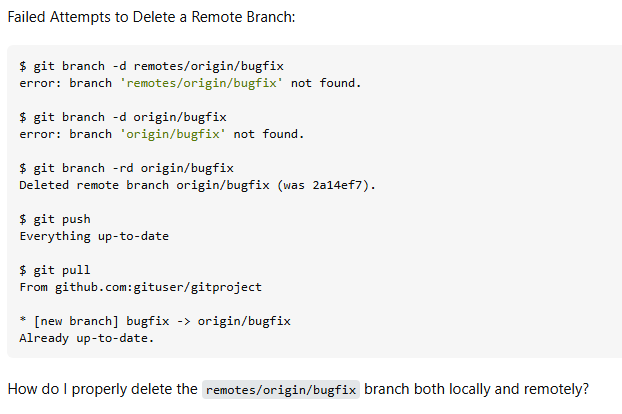
Key takeaways from this example:
- Clear scope. “Delete a Git branch locally and remotely” leaves no doubt about the goal.
- Evidence. The commands and error message transform the post from “teach me Git” to “help me understand this failure.”
- Polish. The grammar, formatting, and code blocks are readable, so potential helpers focus on the problem rather than deciphering the question.
Because everything needed to answer the question is present, responders can jump straight to suggesting git push origin --delete branch-name or explaining the difference between local and remote refs.
The not-so-smart question
Now compare that to a question about “2 individual matrix side by side.” The asker vaguely states that two matrices should appear next to each other but never describes the language, library, or data structure being used. There are spelling mistakes, no code snippet, and no mention of the desired result versus the actual output. The lack of specifics forces helpers to guess. Is this MATLAB, Python, or C? Are we dealing with UI layout or numerical operations? Without a reproducible case, most readers simply move on. You can read the original post here.
The result? The vague question received little engagement, while the clear Git example pulled in precise answers. Quality questions inspire quality answers.
How to craft smarter questions
From these examples I’ve distilled a checklist I now follow before posting to Stack Overflow, Slack, or even emailing a mentor:
- State the goal first. Describe what you expected to happen in one sentence.
- Show, don’t tell. Include code, terminal commands, or screenshots that demonstrate the failure.
- Explain the environment. List the framework, version, OS, or hardware involved.
- Document attempts. Mention what you tried and why it didn’t work so responders avoid suggesting the same thing.
- Proofread. Correct spelling and formatting make your question approachable.
Following this structure doesn’t just earn answers, it sharpens debugging. Many times I’ve solved the issue myself while drafting the “smart” version because documenting assumptions exposes the flaw.
Smart questions build good teams
In collaborative settings, asking better questions shows respect for teammates’ time. When I log a bug with detailed steps or post a pull request discussion with precise context, reviewers can respond quickly, and trust builds over time. Conversely, vague questions slow the team down because someone has to do the investigation I should have done in the first place.
The lesson from Stack Overflow is simple, quality in equals quality out. When we slow down, gather facts, and articulate the problem clearly, we demonstrate professionalism, making it far more likely that someone helps us get unstuck.